
Students will observe weather data and patterns, and investigate the water cycle’s role in our weather systems.
Capacity: 120
4th Grade
Georgia Standards of Excellence: S6E4.1 to S6E4
Field Trip will run for 3 hours and include the following programs (in no particular order):
- The Mark Smith Planetarium is an immersive full dome digital Space Theater that offers GSE-related astronomy programming.
- Explore Earth’s weather systems.
- Examine the atmosphere, hydrosphere, and their effects on weather.
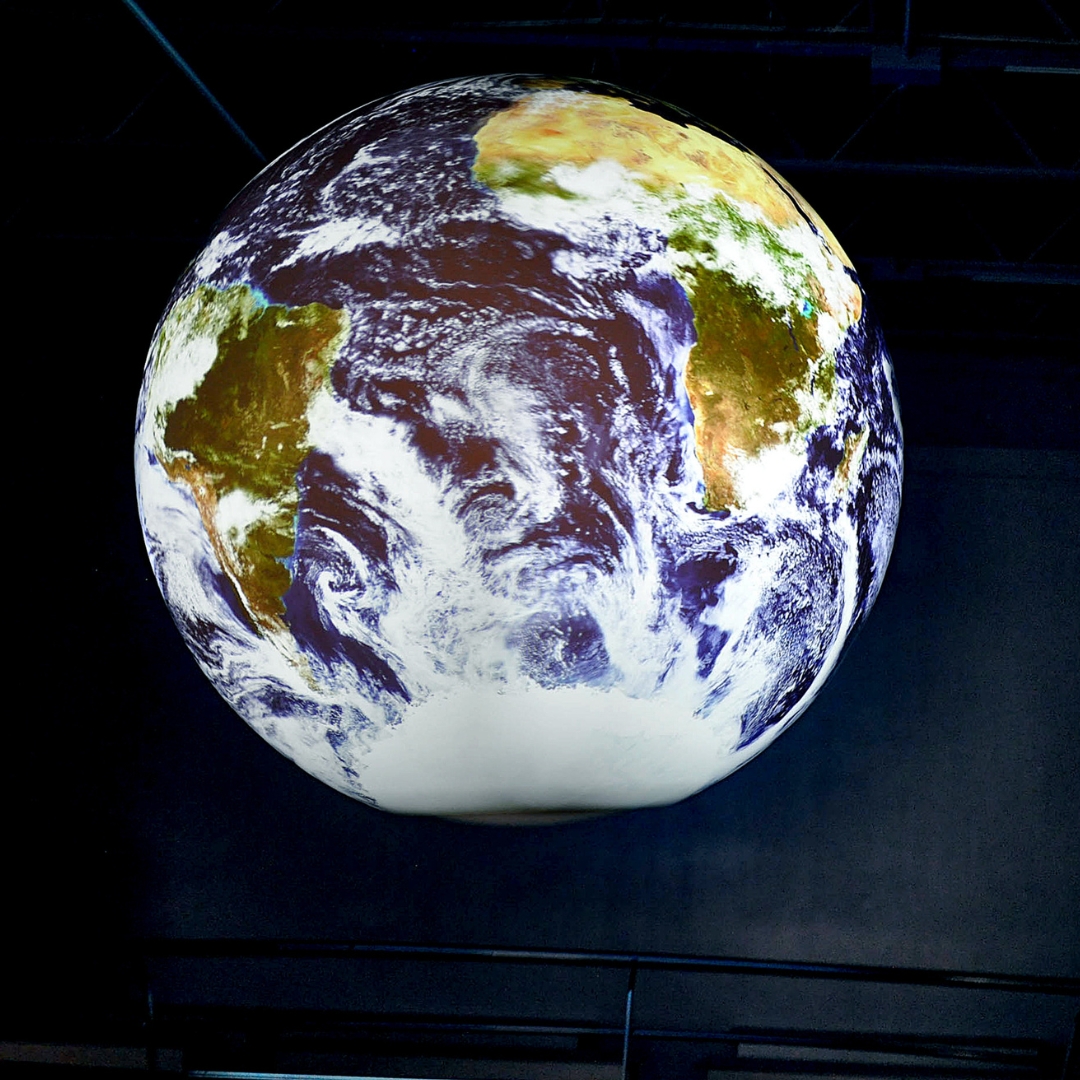
- Science On a Sphere® (SOS) is a giant six-foot sphere and unique educational tool developed by the National Oceanic and Atmospheric Administration (NOAA) that displays real-time planetary data and other visualizations.
- Define weather.
- Discuss specific weather instruments such as thermometer and rain gauge.
- Review the water cycle, including evaporation, condensation, and precipitation.
- Observe real-time cloud and precipitation data to discuss forecasting.
- STEAM Activities occur in our designated classroom space where students learn and create through the STEAM process.
- Explore different parts of the water cycle and discuss how water travels to each part.
- Our newly renovated outdoor picnic area provides covered and uncovered lunch spots for our field trip groups. During this time you may visit our Museum Store.
- Lunch should remain on the bus until lunch time as there is no storage at the Museum.
- You may order/cater lunch for your group. Please let the Front Desk know ahead of time. The Museum is not responsible for your food order.
- If you choose to visit the Museum Store, please send in 10 students at a time with a chaperone THROUGHOUT your lunch time. Waiting until the very end of your lunch time will slow the check-out process and may cause you to miss your final program/bus departure.
Middle School
Georgia Standards of Excellence: S6E3, S6E4.1
Field Trip will run for 3 hours and include the following programs (in no particular order):
- The Mark Smith Planetarium is an immersive full dome digital Space Theater that offers GSE-related astronomy programming.
- Explore Earth’s weather systems.
- Examine the atmosphere, hydrosphere, and their effects on weather.
- Science On a Sphere® (SOS) is a giant six-foot sphere and unique educational tool developed by the National Oceanic and Atmospheric Administration (NOAA) that displays real-time planetary data and other visualizations.
- Review the water cycle.
- Discuss Earth’s atmosphere, its layers, and define the greenhouse effect.
- Observe global ocean currents and wind patterns to examine their effects on global weather and climate.
- STEAM Activities occur in our designated classroom space where students learn and create through the STEAM process.
- Explore different parts of the water cycle and discuss how water travels to each part.
- Our newly renovated outdoor picnic area provides covered and uncovered lunch spots for our field trip groups. During this time you may visit our Museum Store.
- Lunch should remain on the bus until lunch time as there is no storage at the Museum.
- You may order/cater lunch for your group. Please let the Front Desk know ahead of time. The Museum is not responsible for your food order.
- If you choose to visit the Museum Store, please send in 10 students at a time with a chaperone THROUGHOUT your lunch time. Waiting until the very end of your lunch time will slow the check-out process and may cause you to miss your final program/bus departure.
High School
Georgia Standards of Excellence: SES5
Field Trip will run for 3 hours and include the following programs (in no particular order):
- The Mark Smith Planetarium is an immersive full dome digital Space Theater that offers GSE-related astronomy programming.
- Explore Earth’s weather systems.
- Examine the atmosphere, hydrosphere, and their effects on weather.
- Science On a Sphere® (SOS) is a giant six-foot sphere and unique educational tool developed by the National Oceanic and Atmospheric Administration (NOAA) that displays real-time planetary data and other visualizations.
- Discuss Earth’s atmosphere, its layers, and define the greenhouse effect.
- Observe global ocean currents and wind patterns to examine their effects on global weather and climate.
- Explore extreme weather and climate change.
- STEAM Activities occur in our designated classroom space where students learn and create through the STEAM process.
- Explore different parts of the water cycle and discuss how water travels to each part.
- Our newly renovated outdoor picnic area provides covered and uncovered lunch spots for our field trip groups. During this time you may visit our Museum Store.
- Lunch should remain on the bus until lunch time as there is no storage at the Museum.
- You may order/cater lunch for your group. Please let the Front Desk know ahead of time. The Museum is not responsible for your food order.
- If you choose to visit the Museum Store, please send in 10 students at a time with a chaperone THROUGHOUT your lunch time. Waiting until the very end of your lunch time will slow the check-out process and may cause you to miss your final program/bus departure.