Great Balls of Fire: Comets, Asteroids, & Meteors

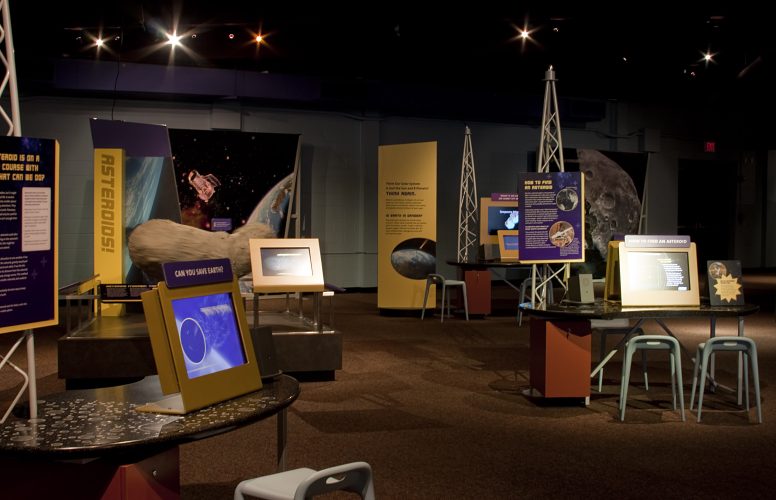
June 10 – September 11, 2016Asteroids and comets are messengers from space that have had a significant effect on Earth’s history and are likely to influence the future as well. While Asteroids and comets are popular subjects for movies like Armageddon, they are also playing their own starring roles in NASA research. In 2001, NASA’s NEAR Shoemaker spacecraft dramatically landed on the asteroid Eros. In 2005, NASA’s Deep Impact’s probe collided with Tempel 1, exploring beneath the comet’s surface. In 2007, NASA launched the Dawn spacecraft to the Main Asteroid Belt.This 3,500 square-foot national traveling exhibition includes dozens of hands-on interactive displays to engage amateur astronomers and was developed by Space Science Institute’s National Center for Interactive Learning, with funding from the National Science Foundation and NASA. Visitors of all ages can take on the role of explorers beyond the physical bounds of the exhibition itself by participating in real-world amateur astronomy activities – like observing the next Leonid meteor shower visible in their locale, joining a ‘rockhound’ club to look for meteorites, getting involved in classes or workshops at a local planetarium. Visitors make comparisons between the risk of asteroid or comet impacts and the risk of more familiar natural disasters such as tsunamis, tornados, earthquakes and volcanic eruptions. The exhibit will weave in stories of individual scientists whose work has furthered the study of asteroids and comets. Scientists, whose formative years included amateur explorer activities, will also be highlighted. Special Thanks to the following Presenting Sponsor:

as well as the following exhibtion sponsors: